What is the first part I should place?
The chassis/body and an engine. Nothing else moves until those are on the plot, and the tutorial walks through buying the build tool first.
Build system
Slot types, documented parts, and the missing-parts shop.
Updated
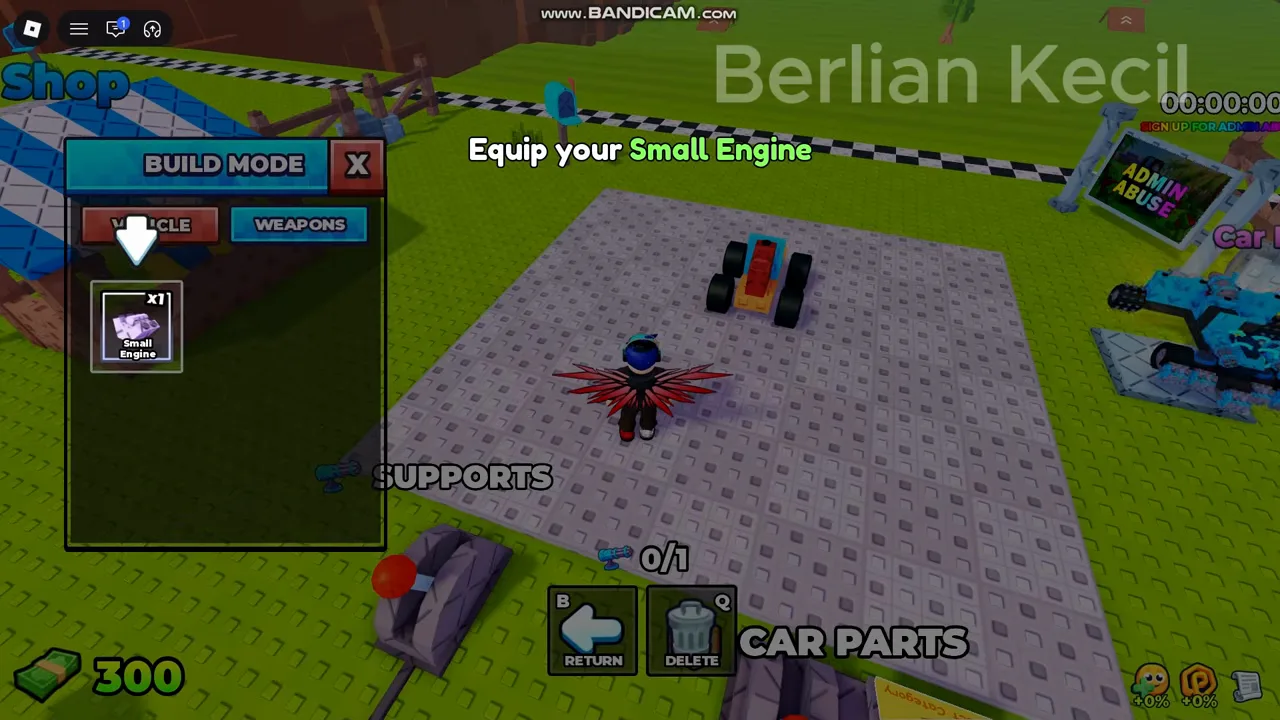
A working build combines several part types before it can drive. Footage of the build flow shows prompts in order: buy the build tool, open the build menu, then place parts onto your plot before pressing DRIVE.
Across sessions, the part set shown in the build menu includes engine, wheel, seat, body, turret, fuel barrel, armour, and boost pieces. The slot counter in build mode (for example 0/8) fills as you place parts, which is how the game communicates that a build has room for a fixed number of pieces.
| Part | Role on the car | Seen in |
|---|---|---|
| Engine | Power source for the drive | Roll station + shop |
| Wheel | Movement | Build menu |
| Seat | Lets you actually drive it | Build menu + codes |
| Fuel Barrel | Run length before refuelling | Build menu |
| Body | The frame everything mounts on | Build menu |
| Turret | Mounted weapon | Build menu |
| Armour | Soaks zombie hits | Build menu |
| Boost | Extra push during a run | Build menu |
| Spike | Contact damage on the front face | Build menu (footage) |
Parts arrive three ways. The CAR PARTS station rolls random parts from a category you pick. The Car Builds panel turns owned parts into finished vehicles — each blueprint lists the exact parts it needs. And codes hand out starter parts: the COMMUNITY code alone gives a Small Engine and a Small Tank.
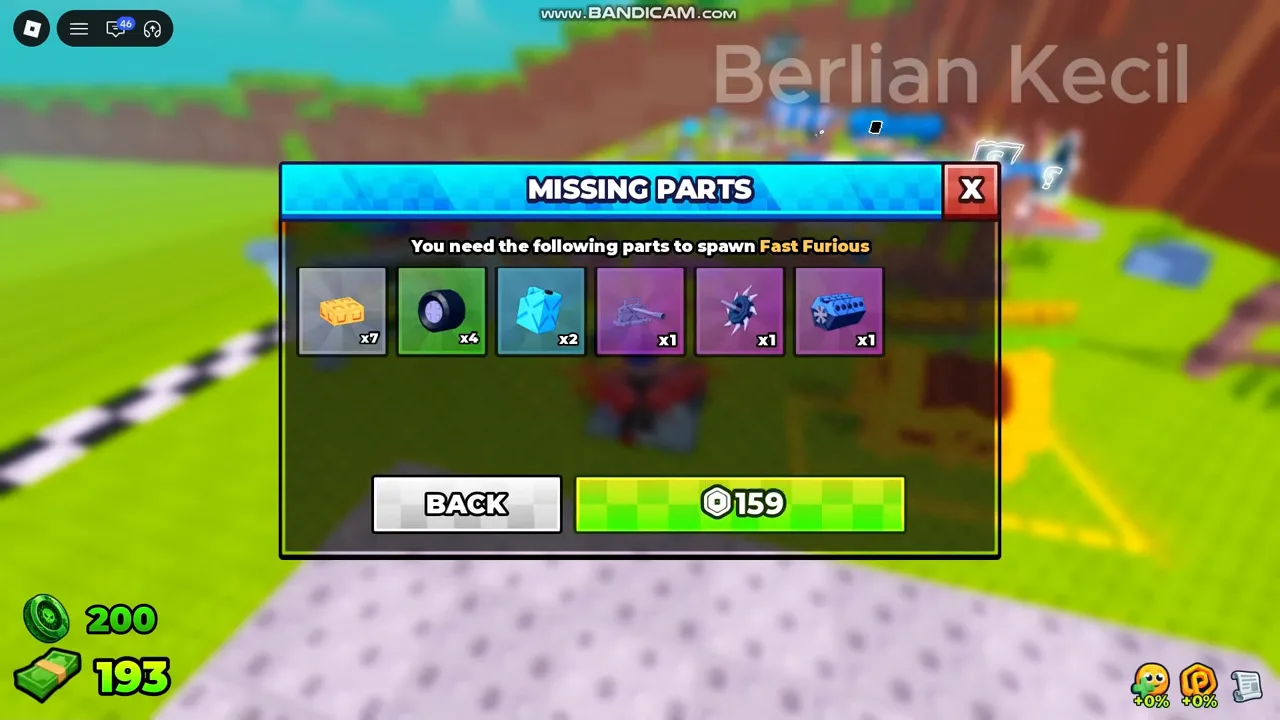
When a blueprint's part set is incomplete, the Missing Parts screen takes over: it reads "You need the following parts to spawn Fast Furious" and lists the missing pieces with counts, alongside a coin top-up price (159 coins observed to complete one set). It is the game's shortcut between "almost have the car" and driving it.
The first engine most players see is the Small Engine, the 1 in 3 slot on the Engines ladder, and the codes page confirms it is also handed out directly. A Small Tank comes bundled with the same code, which pairs with the fuel barrel slot.
Early sessions are about covering the basics — engine, wheels, seat, fuel — before spending on weapons. Footage of a first run shows the player buying the build tool, placing a handful of parts, and only then rolling for a weapon.
Every part carries a value tag visible in pickup popups and the Index — Wooden Spike shows $10, and Flamethrower shows $10,000. Those numbers track with rarity: the rarer the roll slot, the higher the listed value.
That makes duplicates useful. Extra rolls inevitably produce low-tier parts, and the value tags suggest they can be sold or traded back into cash through the shop interface rather than sitting in a list. The full sale flow has not been captured frame-by-frame yet, so the numbers here stay as observed.
Footage of successful runs follows a consistent order: chassis pieces and engine first, wheels and seat next, fuel after that, and weapons last. A car with a weapon but no fuel simply cannot go far, and a car with no seat cannot be driven at all.
Once the basics are covered, armour and boost pieces add survivability and reach. Keep an eye on the slot counter — a build that fills every slot with low-tier pieces still beats a build with two great parts and nothing else.
FAQ
The chassis/body and an engine. Nothing else moves until those are on the plot, and the tutorial walks through buying the build tool first.
The build counter shows a fixed slot count that has displayed values such as 0/8 during build sessions observed in footage. Slots are also split between part groups, so some pieces compete for the same space.
Open Car Builds and pick the vehicle you are working toward — its Required Parts list shows exactly what is still missing, and the Missing Parts screen tops the set up with coins (159 coins completed one observed set).